
I remember sitting in a humid, windowless tent outside Goma, listening to the drone of a generator while three different agency heads argued over a spreadsheet. They were debating the theoretical framework of coordination, but all I could think about was the fact that the fuel truck was stuck fifty kilometers back because nobody had cleared the transit permit. People love to talk about the high-level theory of how the cluster system works, treating it like some elegant, mathematical solution to chaos. In reality, most of those meetings are just expensive ways to avoid admitting that the actual mechanics of moving goods from point A to point B are breaking down.
I’m not here to give you a lecture on UN mandates or the bureaucratic elegance of humanitarian coordination. I’ve spent nine years watching what happens when the paperwork meets the mud, and I know that a well-coordinated meeting means nothing if the supply chain is severed. In this post, I’m going to strip away the jargon and show you the unfiltered reality of the coordination process. You won’t find any polished PR fluff here; just the practical, often frustrating truth of how these systems actually function when the pressure is on.
Table of Contents
The Pulse of Interconnected Business Networks

When people talk about the cluster system, they tend to drift into abstract theories about economic development through clusters. They treat it like a whiteboard exercise. But if you’ve ever sat in a dusty warehouse in Goma waiting for a shipment of rehydration salts, you know that the theory is secondary to the friction of reality. The true pulse of these interconnected business networks isn’t found in a policy document; it’s found in the way a local mechanic, a regional trucking firm, and a specialized customs broker all react when a supply chain bottleneck hits.
In my experience, the efficiency of a cluster depends entirely on how these moving parts talk to one another. It isn’t just about having the right companies in the same geographic zone; it is about the unspoken reliability of the local ecosystem. You can have all the synergy in industrial sectors you want on paper, but if the local fuel supplier can’t guarantee a steady flow during the rainy season, the entire network stalls. Real cluster ecosystem management isn’t about optimizing spreadsheets—it’s about managing the physical dependencies that keep the wheels turning when the formal systems fail.
Why Synergy in Industrial Sectors Drives Delivery
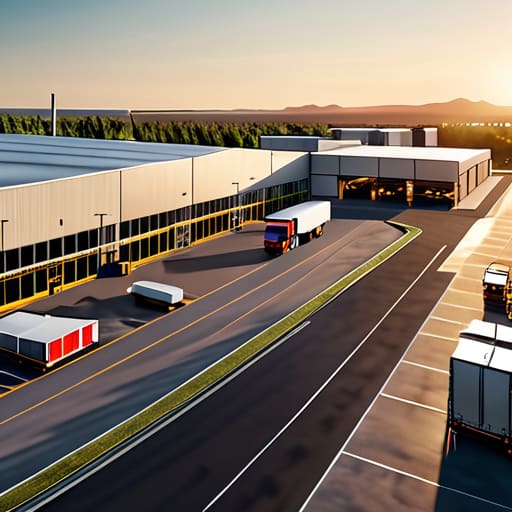
In my experience, synergy in industrial sectors isn’t about the high-level theory found in development white papers; it’s about proximity. When you have a manufacturer, a specialized parts supplier, and a heavy-duty transport firm all operating within the same geographic radius, the friction of doing business drops significantly. This isn’t just academic—it’s practical. In the field, I saw how industrial cluster dynamics functioned: if the local workshop can fix a broken axle in four hours instead of four days because they are part of the same specialized network, the entire supply chain stays alive.
The real driver of economic development through clusters is the reduction of dead time. When these businesses are tightly integrated, they share more than just a postcode; they share a common infrastructure and a predictable flow of labor and goods. You stop worrying about whether a single component will stall a project because the interconnected business networks provide built-in redundancies. For me, the metric for success was never the theoretical growth projections. It was whether the synergy between local suppliers and the main distributors meant the cargo actually cleared the border on schedule.
The gap between coordination and cargo
You can sit in a climate-controlled room in Geneva and debate the efficiency of cluster coordination for six hours, but that doesn’t move a single pallet of antibiotics across a flooded border. The cluster system is just a blueprint; the real work is the friction of making sure the truck doesn’t get stuck in the mud because the warehouse and the transport lead actually spoke to each other.
Yusuf Lindqvist
The Bottom Line
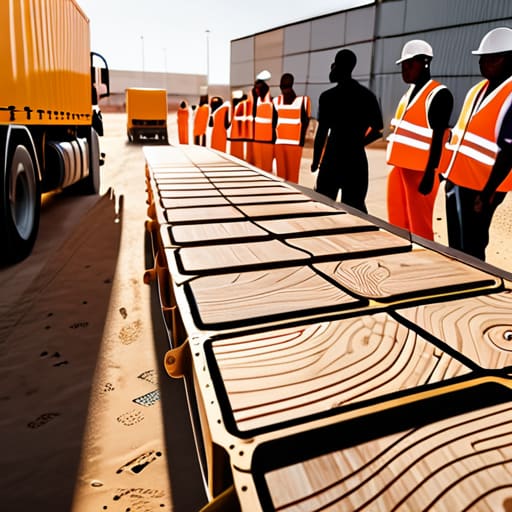
At the end of the day, the cluster system isn’t some abstract theory found in a UN manual; it is a pragmatic framework for managing chaos. We have looked at how these business networks pulse with activity and how industrial synergy ensures that resources don’t just sit in a warehouse in Nairobi, but actually move toward the point of need. The coordination between actors—the NGOs, the private contractors, and the local authorities—is what prevents the entire supply chain from collapsing under its own weight. If the information flow breaks or the industrial links fail, the entire mechanism stalls. It is not enough to have a plan on paper; you need the functional connectivity that only a working cluster can provide.
I have spent too many nights listening to the static on a shortwave radio, waiting for word on a convoy that was supposed to arrive three days ago. In those moments, the high-level policy discussions don’t matter. What matters is the physical reality of the goods reaching their destination. The cluster system is meant to be the engine that makes that reality possible, turning fragmented efforts into a coherent force. We should stop obsessing over the elegance of the coordination models and start focusing on the reliability of the output. Because in this business, the only metric that truly counts is whether the lorry arrived.