
I spent a decade in the back of dusty Land Cruisers across South Sudan and the DRC, where the only metric that mattered was the physical presence of a pallet of malaria nets at a remote clinic. I’ve seen too many high-level summits in Geneva where experts debate the nuances of how the sustainable development goals are tracked using glossy, aggregated data sets that look perfect on a PowerPoint slide. But those spreadsheets don’t account for a washed-out bridge or a corrupt checkpoint. To me, a 5% increase in a regional literacy index means absolutely nothing if the actual supply chain for textbooks has collapsed.
In this post, I’m stripping away the institutional jargon and the inflated progress reports. I won’t waste your time with theoretical frameworks or “impact storytelling” designed to please donors. Instead, I’m going to show you the gap between high-level indicators and ground-level reality. We will look at the mechanics of data collection, the flaws in the current reporting systems, and why the real story of progress is usually found in the logistical grit that the official numbers tend to overlook.
Table of Contents
The Un Sdg Monitoring Framework Is Not a Fairy Tale

The UN SDG monitoring framework is not a fairy tale. In the halls of New York, the metrics look clean, polished, and mathematically sound. You look at the global indicator database and see a seamless progression of percentages and trends that suggest a world being methodically rebuilt. But I’ve spent too many years staring at broken axles and customs paperwork to believe in seamlessness. When you are sitting in a humid warehouse in Goma, waiting for a shipment of cold-chain vaccines that the dashboard says “arrived” three days ago, the high-level reporting feels like a different language entirely.
The reality of measuring progress on SDGs is often a matter of statistical smoothing. We rely on national voluntary reviews to tell us how a country is doing, but these reports are frequently built on the best available data, which is often just a polite way of saying “educated guesses.” There is a massive, systemic gap between a data point recorded in a capital city and the actual movement of goods in the field. We can track the intent, and we can track the budget, but the framework often fails to account for the friction of the real world—the bribes, the washed-out roads, and the missing manifests that ensure the targets remain theoretical while the actual delivery remains a gamble.
Beyond the Global Indicator Database Noise
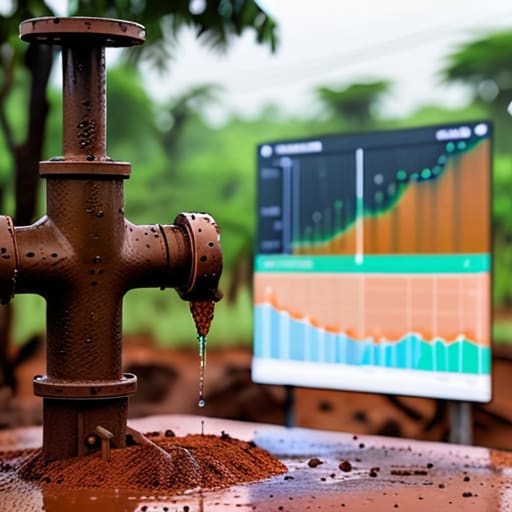
The global indicator database is a massive, sprawling thing. It’s a collection of thousands of data points designed to give the illusion of a bird’s-eye view of the planet. But when you spend years staring at a broken axle in the middle of a rainy season in South Sudan, you realize that these high-level metrics are often just statistical abstractions. The database tells you that “access to clean water” has increased by 4% in a specific region, but it doesn’t tell you if the borehole pump was stolen for scrap metal three weeks after the inspectors left.
Measuring progress on SDGs through these centralized systems often creates a feedback loop of sanitized information. We see a lot of polished numbers flowing into national voluntary reviews, which then get distilled into even more polished summaries for high-level political forum reporting. It’s a process of continuous refinement that tends to smooth out the jagged edges of reality. In my experience, the gap between a successful report and a successful operation is where the truth lives. If the SDG data collection methods rely solely on what a government or a regional office says happened, you aren’t tracking development; you’re just tracking the ability of people to fill out forms correctly.
The Gap Between Data and Delivery
You can track a thousand indicators on a dashboard in New York, but those metrics are just ghosts if they don’t account for the broken axle or the closed border that stopped the shipment from moving. A goal isn’t met because a percentage went up on a spreadsheet; it’s met when the supplies actually hit the ground.
Yusuf Lindqvist
The Last Mile of the Data

We can spend decades refining the UN’s indicator databases and debating the nuances of high-level statistical modeling, but that is just noise if we lose sight of the physical reality. The tracking of the SDGs often gets trapped in a loop of aggregate percentages and glossy progress reports that look perfect on a screen in New York or Geneva. But as I learned moving supplies through the DRC, a 15% increase in regional health coverage is a hollow statistic if the actual supply chain is broken. If the data says the goal is being met, but the medicine is sitting in a warehouse because the roads are washed out or the manifests are forged, then the tracking system has failed. We have to stop mistaking the map for the territory.
Ultimately, the success of these global goals won’t be measured by the sophistication of our monitoring frameworks, but by the integrity of the movement. Real development happens in the gap between the target and the delivery. If we want to move the needle, we need to demand a type of accountability that prioritizes ground-level truth over bureaucratic convenience. The goal isn’t just to check a box in a spreadsheet; it is to ensure that when the world promises a resource, that resource actually arrives at the destination. That is the only metric that matters.