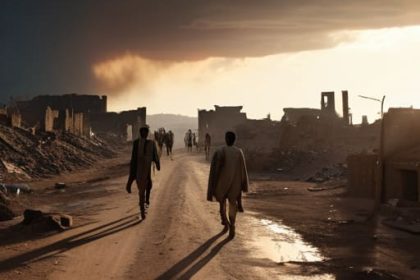
I spent a decade watching politicians debate the nuances of diplomacy in air-conditioned rooms, while I was sitting in a dusty compound in Goma, staring at a stack of seized medical supplies. Most people think understanding what sanctions are and what they do is about studying international law or geopolitical leverage, but that’s a lie. In the real world, sanctions aren’t a theoretical tool of statecraft; they are a physical barrier between a warehouse and a patient. They are the reason a shipment of antibiotics gets flagged by a bank in Frankfurt or why a truck gets held at a border crossing for three weeks because a compliance officer in London doesn’t recognize a local vendor’s name.
I’m not here to give you a lecture on political science or the moral justifications for economic warfare. I’m going to tell you how these restrictions actually work when they hit the ground. We’re going to strip away the diplomatic jargon and look at the mechanical reality of how these policies disrupt supply chains, freeze assets, and change the actual movement of goods. If you want to know how the gears of global trade grind to a halt, you’ve come to the right place.
Table of Contents
The Friction of International Law and Sanctions
In my experience, there is a massive gap between a resolution passed in a glass building in Geneva and the reality of a customs checkpoint in a dry season. When people discuss international law and sanctions, they tend to focus on the legality of the decree. They argue over whether a measure is a legitimate tool of statecraft or a violation of sovereignty. But on the ground, the law doesn’t feel like a legal debate; it feels like friction. It’s the sudden, unexplained delay of a shipment of surgical grade tubing because a bank in Nairobi is suddenly terrified of a compliance audit.
The distinction between unilateral vs multilateral sanctions is where the logistics get truly messy. When a single country pulls the plug, the rules are clear, if harsh. But when you have a patchwork of different regimes overlapping, you get a legal gray zone that nobody wants to touch. Most suppliers won’t risk their entire operation to test the boundaries of a new regulation. They simply stop shipping. This is how the economic sanctions impact trickles down from high-level diplomacy to the actual supply chain: it isn’t a sudden wall, but a slow, grinding halt of everything that moves.
Targeted vs Comprehensive Sanctions Choosing the Blockade
In my experience, the debate between targeted vs comprehensive sanctions is often treated as a theoretical exercise in a lecture hall, but on the ground, it is the difference between a surgical strike and a sledgehammer. Comprehensive sanctions are the blunt instruments. They aim to choke an entire economy, effectively shutting down the ports and the banking systems. When you implement these, you aren’t just hitting the regime; you are hitting the guy trying to drive a truck full of insulin across a border. The economic sanctions impact becomes a massive, indiscriminate wall that treats a nation’s entire infrastructure like a single enemy combatant.
Targeted sanctions, or “smart” sanctions, are supposed to be different. The idea is to freeze the assets of specific officials or restrict certain luxury goods to avoid hurting the general population. On paper, it looks cleaner. In practice, the sanctions enforcement mechanisms are often so opaque that even legitimate humanitarian cargo gets flagged by a bank’s compliance algorithm. You might not be targeting the food, but if the money to pay the supplier can’t move because of a broad fear of secondary sanctions, the food stays in the warehouse. It’s not about the intent; it’s about the unintended blockade created by the fear of making a mistake.
The Real Metric of a Sanction
People talk about sanctions as if they are surgical strikes or political statements, but on the ground, they are just another layer of friction. A sanction isn’t a concept in a UN briefing; it is a closed gate, a frozen bank account, or a customs officer who suddenly finds a reason to hold a shipment of essential supplies in a warehouse for six months. You can debate the ethics of the policy all you want, but the only reality that matters is whether the supply chain is still moving or if it has been choked to a halt.
Yusuf Lindqvist
The Reality on the Ground
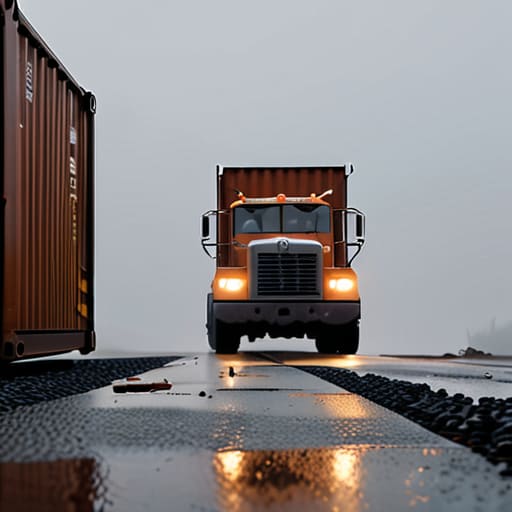
At the end of the day, sanctions are just another layer of complexity in an already broken system. We have looked at how they function as tools of statecraft, moving from the broad strokes of comprehensive embargoes to the surgical precision of targeted lists. But whether a sanction is meant to freeze a dictator’s bank account or cripple a regime’s ability to fund a war, the result is often the same: increased friction. For those of us who deal in the physical movement of goods, the distinction between a political objective and a logistical nightmare is paper-thin. The policy might be written in a boardroom in Geneva or D.C., but the actual impact is felt at the checkpoint, where a single line of text on a permit can turn a three-day transit into a three-month standstill.
I don’t care much for the grand theories of geopolitical leverage. If you want to understand the true weight of a sanction, don’t look at the press release; look at the empty warehouse or the truck idling at a closed border. My job has always been to ensure the cargo moves, and sanctions are often the greatest obstacle to that mission. However, if we can bridge the gap between high-level diplomacy and the granular reality of supply chains, we might actually manage to protect the people who shouldn’t be caught in the crossfire. The goal shouldn’t just be to exert pressure, but to ensure that the essentials still arrive.