
I once spent three weeks in a dusty warehouse outside Goma, staring at a stack of cold-chain vaccine crates that were never going to make it to the clinics because the local bridge had washed out. While the headquarters in Geneva were busy publishing glossy reports on population percentages and theoretical coverage, I was looking at a broken supply chain. That’s the problem with the way people talk about public health; they treat it like a math problem on a whiteboard, but they ignore the physical reality of the terrain. If you want to understand what herd immunity actually means, you have to stop looking at the colorful infographics and start looking at the gaps in the line where the protection fails to reach.
I am not here to lecture you on epidemiological modeling or recite textbook definitions that fall apart the moment a real crisis hits. Instead, I’m going to strip away the academic jargon and tell you how this works when the logistics meet the reality of a spreading pathogen. I’ll show you why a high percentage on a spreadsheet is useless if the community shield has holes large enough for a virus to drive a truck through.
Table of Contents
Beyond the Numbers Understanding Pathogen Transmission Dynamics

In the field, we don’t talk much about the elegance of a curve on a graph. When I was managing cold chains in South Sudan, the math mattered less than the physical reality of how a sickness moves through a crowded camp. You can look at the R0 value and immunity levels on a monitor in Geneva all day, but that doesn’t change the fact that a virus is just a biological freight train. If the tracks are clear, it moves. If you want to stop it, you don’t just need numbers; you need to create enough friction in the system so the movement stalls.
This friction is what people mean when they talk about the epidemiological herd immunity threshold. It isn’t a magic number where the disease simply vanishes; it’s a tipping point where the chain of transmission loses its momentum. I’ve seen plenty of high vaccination rates on paper that failed to translate to actual protection because the logistics of the rollout were broken. If the doses don’t reach the most mobile or the most isolated, the math stays theoretical while the pathogen keeps moving. It’s about the structural integrity of the barrier, not just the tally of shots in arms.
The R0 Value and Immunity Levels Calculating the Arrival
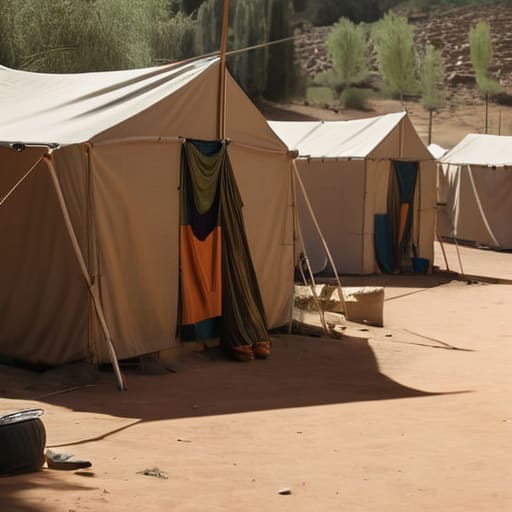
In the field, we don’t talk about the R0 value like it’s a theoretical abstraction; we treat it like a weather report for a supply route. If a pathogen has an R0 of three, it means every single case is a potential wreck that can take out three more vehicles. You can calculate the epidemiological herd immunity threshold on a clean whiteboard in Geneva all day long, but in a displacement camp or a crowded urban center, that math is just a baseline. It tells you how many people need to be “armored up” before the transmission chain breaks.
The problem is that the math assumes a perfect delivery. In my experience, the gap between the calculated threshold and reality is where people die. You can have the right vaccination rates and community protection on paper, but if the cold chain fails or the distribution is uneven, the shield has holes. I’ve seen distribution manifests that looked perfect, only to find the actual immunity levels in a village were nowhere near the required level because the cargo sat in the sun for six hours. We aren’t just managing numbers; we are managing the integrity of the barrier.
The Logistics of Protection
Don’t talk to me about the theoretical threshold or the elegant curves on a modeling graph. In the field, herd immunity isn’t a mathematical certainty; it’s a supply chain problem. It’s about whether the collective resistance of the population is strong enough to act as a physical barrier, stopping the pathogen in its tracks before it reaches the most vulnerable link in the chain.
Yusuf Lindqvist
The Final Manifest

At the end of the day, herd immunity isn’t a theoretical milestone we reach on a graph; it is the cumulative result of individual barriers holding firm. We have looked at the R0 values and the complex transmission dynamics that dictate how a pathogen moves through a crowd, but those are just variables in a calculation. The reality is that immunity—whether through infection or vaccination—is the logistical infrastructure of public health. If the transmission chains are broken, the virus finds no path forward. It isn’t about achieving a perfect, static percentage; it is about ensuring the protective threshold remains high enough to prevent the next surge from overwhelming our capacity to respond.
I have spent too many years watching people focus on the grand promises of international aid while ignoring the actual movement of supplies. Herd immunity functions the same way. It is easy to get lost in the lofty rhetoric of “eradication” or “global safety,” but those are just words on a donor’s pamphlet. The truth is found in the grit of the implementation: the vaccines reaching the remote clinic, the people staying protected, and the chain of transmission finally snapping. We don’t need more optimistic projections; we need the shield to hold when the pressure is applied. That is the only metric that actually matters.