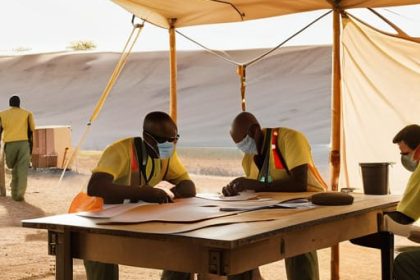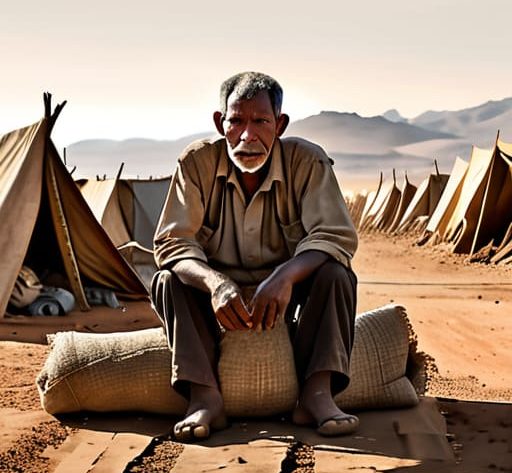
I once sat in a humid warehouse outside Goma, staring at a stack of manifests that didn’t match the reality on the ground. The NGOs were busy debating the legal nuances of international law, but nobody was talking about the fact that the trucks were stuck in the mud fifty kilometers away. People get caught up in the academic jargon, but if you want to understand how internal displacement differs from refuge, you have to stop looking at the legal definitions and start looking at the logistics of survival. A refugee has a border to cross and a status to claim; an internally displaced person is just someone trapped within their own country, often waiting by a roadside for a lorry that might never come.
I am not here to give you a lecture on United Nations frameworks or the fine print of the 1951 Convention. My goal is to strip away the sentiment and show you the mechanical reality of what happens when people lose their homes but remain stuck within their own borders. I will explain the practical, ground-level distinctions of how internal displacement differs from refuge through the lens of supply chains, access, and the brutal math of aid delivery.
Table of Contents
Cross Border Migration vs Internal Movement
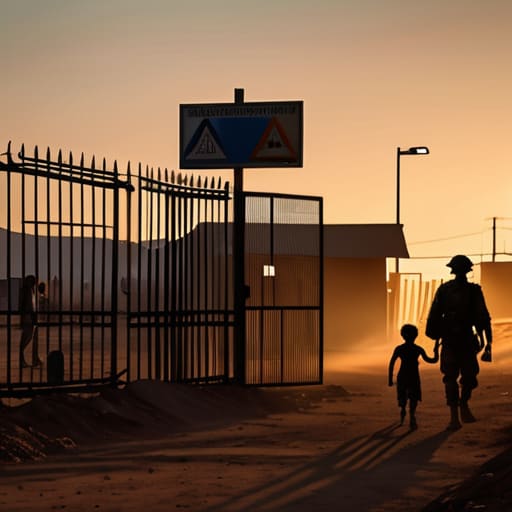
The distinction between cross-border migration vs internal movement isn’t a matter of legal theory for me; it’s a matter of customs stamps and checkpoints. When a family crosses a border, they enter the sphere of the UNHCR mandate for refugees. There is a clear, albeit imperfect, international framework waiting for them. They become a line item in a global protection system. They have a status that, on paper at least, grants them rights that their home government has failed to provide.
When people move within their own country, the math changes entirely. These are internally displaced persons (IDPs), and they are often caught in a jurisdictional vacuum. Because they haven’t crossed a line on a map, the concept of sovereignty and internal displacement becomes a massive, practical barrier. A government can claim they are “handling” the situation internally while actually blocking access to the very zones where people are starving. For a logistician, this is the nightmare scenario. You aren’t fighting a lack of supplies; you are fighting a lack of permission. In a refugee camp, the protocols are established. In an IDP settlement, you are often just a driver staring at a closed gate, wondering if your cargo will ever reach the people waiting by the roadside.
The Heavy Weight of Sovereignty and Internal Displacement
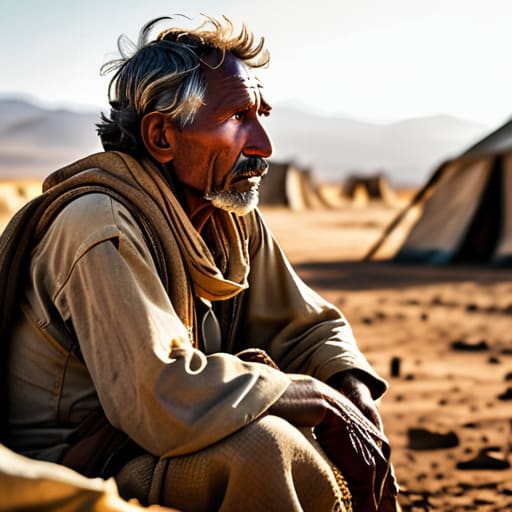
When a person crosses a border, they step into the jurisdiction of international refugee law, triggering a specific set of protections and a clear UNHCR mandate for refugees. But when someone is forced to move within their own country, they hit a brick wall made of nothing but lines on a map and the concept of sovereignty and internal displacement. To a government, an internally displaced person is still a citizen, which sounds fine on paper, but in practice, it means the state holds the keys to their survival. If the state is the one causing the displacement, or if it simply lacks the capacity to respond, there is no external legal mechanism to force their hand.
I’ve seen this play out in the dust of transit camps where the legal status of internally displaced persons is effectively non-existent. Unlike a refugee camp, which operates under a distinct international framework, an IDP settlement often looks like a forgotten village. There is no automatic trigger for global intervention. You aren’t waiting for a legal ruling; you are waiting for the humanitarian aid for IDPs to actually clear customs and make it through the checkpoints. In the logistics of survival, sovereignty isn’t a political concept—it is the gatekeeper that decides whether the supplies reach the people or rot in a warehouse.
The Logistics of Belonging
A refugee has a status, a paper, and a border to cross; an internally displaced person just has a longer road and a government that can look the other way while they starve.
Yusuf Lindqvist
The Reality on the Ground
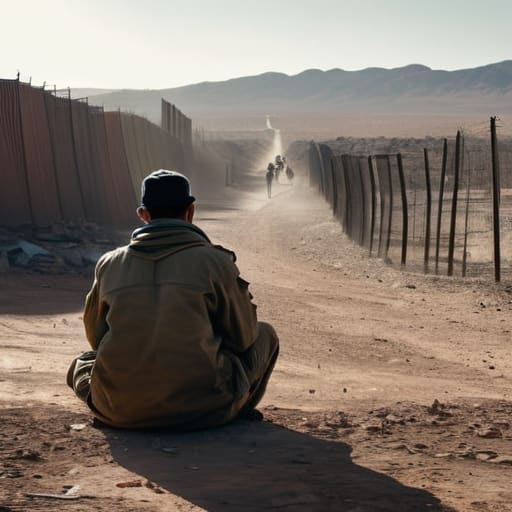
At the end of the day, the distinction between a refugee and an internally displaced person isn’t just a matter of legal jargon or UN definitions. It is a question of jurisdiction and access. A refugee has the protection of international law because they have physically stepped outside their own government’s reach. An IDP, however, remains trapped within the very borders that may be failing them, making them entirely dependent on a state that might be the cause of their flight. When the legal status changes, the entire logistical chain changes. We stop talking about asylum protocols and start talking about sovereignty versus survival, where the ability to deliver aid is often dictated by a border official’s signature rather than a person’s need.
We spend too much time debating the nuances of international frameworks and not enough time focusing on the friction of the terrain. Whether someone is crossing a frontier or sitting in a camp three provinces away, the fundamental metric of success remains the same. It isn’t found in the policy papers or the high-level summits in Geneva; it is found in the integrity of the supply line. If the trucks can’t move, the definitions don’t matter. My goal isn’t to solve the legal puzzle of displacement, but to ensure that when the world acknowledges a crisis, the actual cargo reaches the people who are still waiting by the roadside.