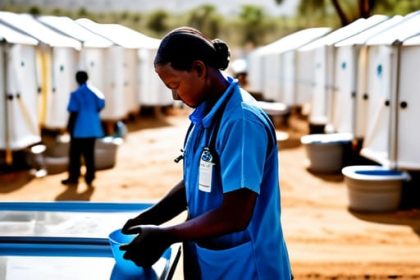
I remember sitting in a dusty compound outside Goma, watching a group of local elders stare at a fleet of white Land Cruisers that had just rolled in. The NGO headquarters in Geneva were busy publishing glossy reports on “socio-economic integration” and “community resilience,” but the elders weren’t looking at the spreadsheets. They were looking at the sudden spike in grain prices and the fact that their well was now being used by three different agencies. This is the part the glossy brochures leave out: how host communities are affected is rarely about the grand developmental theories discussed in air-conditioned offices; it is about the tangible friction created when a massive influx of resources hits a fragile local economy.
I am not here to talk to you about humanitarian sentiment or the lofty goals of “empowerment.” My experience has taught me that if the supply chain breaks, the community pays the price in ways no impact assessment can predict. In this post, I am going to strip away the jargon and look at the actual mechanics of what happens on the ground. I will show you how to look past the appeal totals and see the real-world consequences of presence, from market inflation to resource competition, based on years of seeing where the trucks actually stop.
Table of Contents
Infrastructure Pressure on Public Services When the Roads Fail
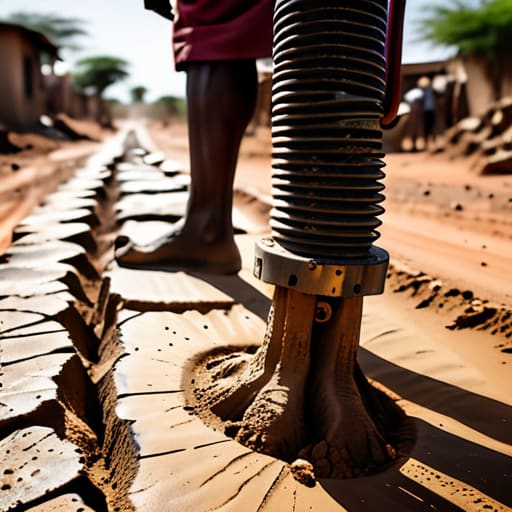
When a massive influx of people hits a district, the first thing to buckle isn’t the social fabric—it’s the asphalt. I’ve seen it in South Sudan and the DRC: a sudden surge in demand for movement, supplies, and aid transit turns a manageable dirt track into a graveyard of axles and suspension systems. This infrastructure pressure on public services isn’t just about potholes; it’s about the fact that the local clinic’s water pump and the primary school’s single latrine are now being shared by three times the original population. The math simply doesn’t work.
The real danger lies in the resource scarcity and community strain that follows. When the heavy NGO convoys roll through, they tear up the very roads the locals use to get their crops to market. You end up with a situation where the “aid” is moving efficiently, but the local economy is grinding to a halt because the transit routes are physically disintegrating. It’s a paradox I saw constantly: the more we tried to scale up the logistics to meet the crisis, the more we inadvertently choked the local ability to function. It isn’t a matter of bad intentions; it’s a matter of unintended mechanical consequence.
Resource Scarcity and Community Strain the Empty Granary

Resource Scarcity and Community Strain: The Empty Granary
When a sudden influx of people hits a region, the math changes instantly. It isn’t about the benevolence of the aid agencies; it is about the math of the local market. If a village has a single borehole and a communal grain store, and suddenly three thousand people arrive, that math breaks. I’ve seen it in South Sudan and the DRC: the local population doesn’t see a humanitarian crisis; they see their own diminishing margins. The resource scarcity and community strain isn’t a theoretical concept in a policy brief; it’s a mother realizing the price of maize has doubled in a week because the supply can’t keep up with the new demand.
This is where the real friction starts. When the local granary runs dry, the resentment isn’t directed at the global economy—it’s directed at the person standing in line next to you. We talk a lot about “integration,” but you can’t integrate people who are competing for the same liter of clean water. If the humanitarian response focuses solely on the displaced and ignores the socioeconomic impact on local populations, you aren’t solving a crisis; you are just exporting tension. You can bring in all the high-protein biscuits you want, but if the local farmer can no longer afford to sell his crop at a fair price, the peace won’t last.
The Math of Misery
You can print all the glossy brochures you want about ‘community integration’ and ‘resilience building,’ but a host community doesn’t measure humanitarian impact by the number of workshops held in a tent; they measure it by whether the sudden influx of ten thousand people means their single borehole is now running dry and their local clinic has run out of basic antibiotics.
Yusuf Lindqvist
The Reality on the Ground
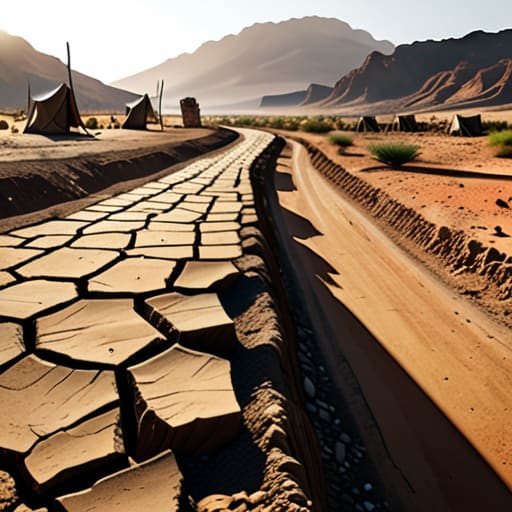
At the end of the day, the impact on host communities isn’t found in a donor’s glossy annual report or a spreadsheet of projected socio-economic benefits. It is found in the cracked asphalt of a road that wasn’t built to handle three times its intended tonnage, and in the quiet tension of a village where the local well has suddenly run dry because of a new camp nearby. We talk about “integration” and “community resilience,” but these are just abstractions. The reality is a measurable strain on every existing system—from the local clinic’s medicine stock to the communal grain stores. If the influx of people isn’t met with a corresponding, tangible increase in physical supplies and infrastructure, then “aid” is just a way of shifting a crisis from one group to another.
If we want to actually respect these communities, we have to stop treating them as background characters in a humanitarian drama. They aren’t just “hosting”; they are absorbing the shock of a global crisis with their own limited resources. True success isn’t measured by how many people we reach with a handout, but by whether we have fortified the foundation of the place they call home. We need to move past the sentiment and get back to the hard logistics of stability. When the trucks finally stop rolling and the NGOs pack up, the only thing that will matter is whether the local road still holds and the granary is still full.